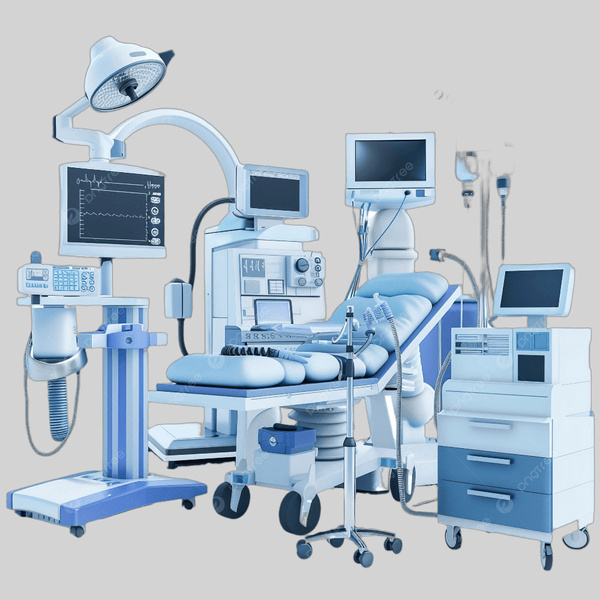
Science, medicine, education, and industry all rely heavily on laboratories to function. In a laboratory, researchers, technicians and students use a variety of tools to test, measure and analyze various types of materials. Thus, it is beneficial for laboratories to have a comprehensive list of laboratory equipment/capabilities in order to help equipment selection and to enhance efficiencies in the work performed.
This article will present a basic yet useful laboratory equipment/capability list and describe the function/purpose of each item and the importance of that item in today’s laboratory environment.
More Medical And Lab Items At Our Store
What Is Laboratory Equipment?
Laboratory Equipment is made up of various tools and devices that are used by scientists to conduct experiments or test materials. They assist the scientist in the measurement, heating, mixing, and observing of materials for analysis.
According to their function, laboratory equipment can be categorized into two groups: simple or basic equipment and sophisticated machines that are used to conduct more detailed scientific research. Regardless of whether it is simple or complex in design or functionality, laboratory equipment is an essential part of the overall laboratory environment.
Why a Laboratory Equipment List Is Important?
Keeping an accurate laboratory equipment list allows labs to be structured and helps laboratory purchasers/professionals find appropriate tools for their job.
Some of the benefits of an equipment list include:
* Assists in the planning stages of a laboratory set up
* Simplifies the equipment purchasing experience for users
* Increases the overall productivity of a lab
* Provides accurate results when conducting scientific studies
* Helps ensure the safety of all lab personnel
Thus it is very important for every laboratory to have an up-to-date equipment list.
Basic Laboratory Equipment List:
Here are several frequently utilized laboratory tools found in healthcare and scientific research sites,
Academic institutions, and industrial laboratories.
1. Beakers
A beaker is a simple receptacle for holding liquid, mixing liquids, and heating liquids. A beaker has a wide mouth and markings for measurement.
2. Test Tubes
A test tube is a small glass tube used for chemical reactions and experimental procedures. This type of apparatus is commonly used in chemical and biological laboratories.
3. Flasks
Different flasks will be used within a lab, like Erlenmeyer flasks or volumetric flasks. Flasks can also be used as mixing containers for liquids or making solutions.
4. Microscope
A microscope is used to look at things that cannot be seen with the naked eye, such as cells and bacteria and other microorganisms.
5. Centrifuge
A centrifuge separates substances by density. It uses a high-speed spinning motion to separate liquids and solid particle matter.
6. Laboratory
Balance Laboratory balances are used to accurately weigh out materials and samples.
7. Pipette
A pipette allows you to move a small amount of liquid from one container to another, and also gives you an accurate measurement.
8. Bunsen
Burner A Bunsen burner produces a controlled flame, which scientists use for heating, sterilization, or combustion in experiments.
9. Petri Dish A Petri dish is used in microbiology labs as an aid to grow bacteria or other organisms.
More Medical And Lab Items At Our Store
Advanced Laboratory Equipment:
Many laboratories have more sophisticated machines in addition to their basic tools, which allow more accurate analysis and research results.
Some examples of these advanced machines include:
- Spectrophotometers
- pH Meters
- Incubators
- Autoclaves
- Chromatography Systems
These instruments are common in medical, pharmaceutical, and research laboratories.
How to Choose the Right Laboratory Equipment?
Selecting the appropriate apparatus is crucial to ensuring the laboratory is successful. Thus, laboratories must evaluate a variety of criteria when selecting apparatus.
The first area to consider is the instrument’s quality and accuracy. Using dependable equipment will provide better experimental outcomes.
The second criterion will be the laboratory’s intent. Medical laboratories will require different apparatus compared to educational labs.
The last area of consideration will be purchasing from recognized vendors. Proper warranty coverage, maintenance service, and quality of product can be ensured this way.
Growing Demand for Laboratory Equipment:
The global demand for lab equipment continues to rise. Advanced lab equipment is required in many industries including healthcare, pharmaceutical, environmental testing and research.
To meet this need, manufacturers and suppliers are constantly innovating new instruments to help labs perform testing more quickly and accurately than they have in the past.
More Medical And Lab Items At Our Store
Conclusion:
An effective laboratory equipment inventory spreadsheet is extremely important in a present-day laboratory. It enables scientists, researchers, and students to conduct their experiments in an organized and safe manner.
All laboratories use basic tools such as test tubes, beakers, and microscopes. Whereas the more complicated instruments contribute to complex scientific research.
Thus, knowing and understanding about lab tools and knowing how to select appropriate laboratory equipment can significantly improve laboratory performance and enhance the quality of research.